
Preparing Your Child and Family for a New Nanny: The First 2 Weeks
The first two weeks with a new nanny: how to prepare your child, what to tell the nanny, a day-by-day adjustment plan and the signs that things are going well.
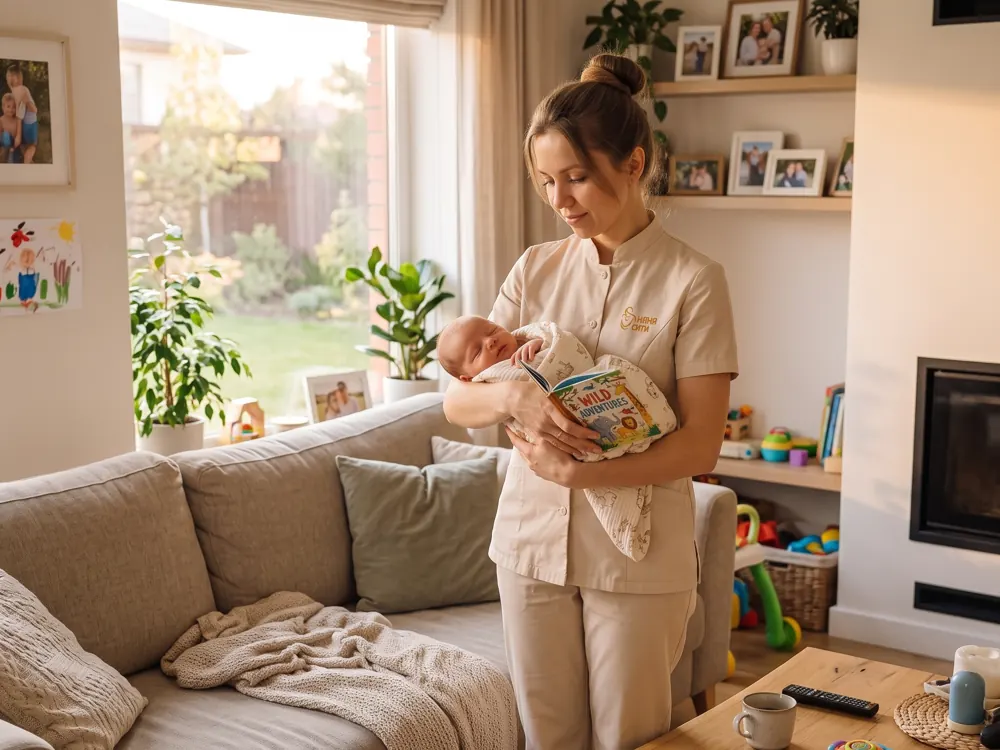
You have found a nanny, agreed on the terms and set a start date. Now comes the most important stage — adjustment. The first two weeks largely decide whether the new person becomes "one of us" for your child. Here is a plan that works well for Moscow families.
Before the nanny starts
Tell your child in advance
For a baby under two, a calm mother nearby is enough. Tell older children a few days ahead: "Olga will come to play and walk with you while Mum is at work." Be honest: "It will feel new at first, then you will become friends."
Prepare a "child passport"
One or two pages that will save the nanny weeks of observation:
- daily routine: waking, meals, naps, walks, bath;
- what the child eats and refuses, allergies, preferences;
- how they calm down and fall asleep, favourite toys and books;
- fears and triggers, how they react to "no";
- house rules: screens, sweets, guests, playground;
- contacts: parents, paediatrician, relatives, nearest clinic.
Prepare the workplace
For a live-in nanny — a separate room with basic comforts. For a live-out nanny — space for her things, easy access to the child's supplies, keys or the intercom code.
Week 1: getting to know each other with parents around
Ideally a parent is at home for at least half the day for the first two or three days. The child sees that the new person is trusted by the parents.
- Days 1–2: the nanny observes, the mother shows the routine, you walk and feed the baby together.
- Days 3–4: the nanny takes over part of the day — a walk, play, meals — while the mother stays nearby.
- Days 5–7: the mother leaves for 2–3 hours, then half a day, and returns at the agreed time.
Never slip away secretly: a short, calm goodbye is better than a sudden disappearance. Tears at parting are normal and usually stop within minutes.
Week 2: the nanny works independently
- 2–3 photos or short messages a day — meals, naps, where you walked;
- a 5–10 minute talk in the evening about what went well and what was hard;
- a written list of the nanny's questions.
What to watch in the first two weeks
- does the child go to the nanny and smile at her by the end of the week;
- are the sleep and meal routines kept;
- does she react to tantrums calmly;
- does she ask questions, suggest activities and tell you about the day;
- does she follow the agreed house rules.
A warning sign is not crying at parting but a child who becomes withdrawn, sleeps badly and still refuses to stay with the nanny after 10–14 days.
Common parent mistakes
- monitoring every minute via cameras and messages — the nanny loses initiative;
- changing rules without warning;
- discussing the nanny's shortcomings in front of the child;
- expecting perfection in week one — it takes at least a month to judge properly.
If something goes wrong
Start with a conversation — the issue is often a misunderstanding. If nothing changes, tell the agency: your manager will talk to the nanny and, if needed, offer new profiles. Replacements are provided under the contract.
Before starting, the candidate provides a medical record or health certificates. Additional tests are available at the family's request.
Adjustment at different ages
Babies under one
Routine and touch matter most. Ask the nanny to repeat your rituals in the first days: the same lullaby, the same bedtime sequence. For a baby, predictability matters more than activities.
Toddlers aged 1–3
This is the age of separation anxiety. Comfort objects help — a favourite toy or something of the mother's — as do short goodbye rituals: a hug, a wave from the window, and saying when you will be back ("after lunch and nap").
Preschoolers and schoolchildren
Older children can be involved. Let them show the nanny their room, favourite games and talk about friends. A child who feels heard accepts a new adult faster.
Helping the nanny settle in
- name one adult she should go to with questions;
- introduce her to everyone in the house — grandparents, housekeeper, driver;
- show the walking routes, the nearest pharmacy and the children's clinic;
- praise what goes well, especially in the first days.
First-day checklist
- keys, intercom code, Wi-Fi password;
- a contact list on the fridge;
- petty cash and how to report purchases;
- an agreement on photos of the child on social media — usually not allowed;
- the time you will be back.
Frequently asked questions
- How long does adjustment take? — For most children one to three weeks; for 1–2-year-olds sometimes up to a month.
- Should we install cameras? — You can, but tell the nanny in advance: hidden monitoring undermines trust.
- What if my child calls the nanny "Mum"? — It is normal for toddlers; calmly repeat names, there is no need for jealousy.
- Can we go on a business trip straight away? — Better not: parents should be around at least in the evenings for the first two weeks.
- How do we know the nanny is coping? — The child is calm, the routine is kept, and the nanny reports on the day and asks questions.
A good search starts with a clear request — leave yours on find a nanny or see all formats on nanny in Moscow.
Read also



Need help finding the right person?
Leave a request — our manager will call you back and send candidate profiles.




Contacts
Visit our office in central Moscow or contact us any convenient way — the consultation is free. We speak English.